
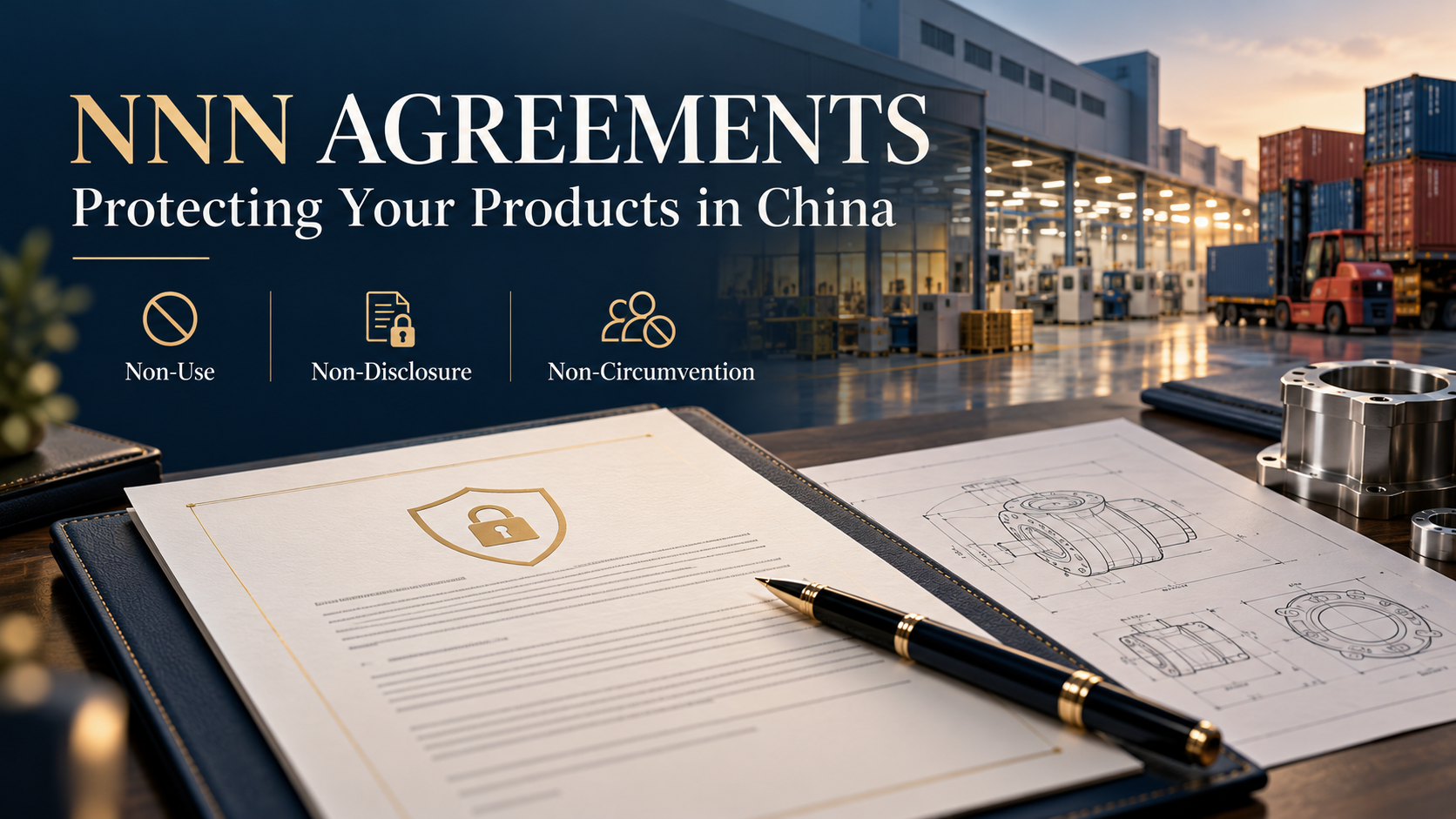
What is NNN Agreement?
The three Ns are “Non-Use”, “Non-Disclosure” and ‘Non-Circumvention”.
Non-Use
A non-use clause limits the purposes for which the supplier / manufactor may use your information and materials.
For example, you may authorise a supplier to assess manufacturing feasibility, prepare a quotation or fulfil approved purchase orders. The agreement should prohibit use outside that purpose, including unauthorised production or using your confidential designs to develop competing products.
It should also distinguish your information and intellectual property from the supplier’s existing technology and independently developed materials.
Non-Disclosure
A non-disclosure clause controls who may receive your confidential information and under what conditions.
The agreement should define the protected information, limit access to authorised recipients and require appropriate confidentiality safeguards. It should also address subcontractors, permitted disclosures required by law, and the return or destruction of information.
Appropriate exceptions usually include information that is already public, lawfully obtained from another source or independently developed without using your confidential information.
Non-Circumvention
A non-circumvention clause restricts a supplier from bypassing you in specified commercial relationships.
For example, it may prevent the supplier from approaching customers you introduced to sell products developed through your manufacturing relationship.
The restriction should identify the protected relationships, prohibited conduct and duration. It should also address exceptions, such as demonstrable pre-existing relationships, rather than imposing an unrestricted ban on dealings.
Protecting Your Products when produce in PRC
Manufacturing in China can offer significant commercial opportunities. Sharing product designs, specifications and business information with a prospective supplier may create business risks.
Before disclosing sensitive information, purchaser may consider whether a NDA is adequately restrict how the recipient/ manufacturer / supplier may use it, disclose it or exploit the commercial information you introduce.
An NNN Agreement may assist purchaser to address these risks. Its effectiveness depends on careful drafting, proper execution and a practical enforcement strategy.
A NDA generally restricts the disclosure of confidential information. Depending on its wording, it may also restrict use, a basis NDA may leave the following risks unaddressed, including a supplier:
- using the designs to manufacture products for itself or another customer
- producing and selling unauthorised additional units
- sharing the confidential information with subcontractors or related companies and
- approaching customers or distributors directly
An NNN agreement addresses confidentiality, permitted use and specified commercial dealings.
The agreement should contain
- a carefully drafted dispute resolution clause
- a professional bilingual agreement can help the parties understand their obligations and reduce translation disputes
- when more than one language is used, the agreement should specify which version prevails if there is inconsistency
- an agreed damages clause to specify an amount payable or a calculation method, for particular breaches and
- the manufacturer or supplier must undertake to control access
This post provides general information only and does not constitute legal advice. Obtain advice from appropriately qualified lawyers about your particular circumstances, including applicable foreign law.