
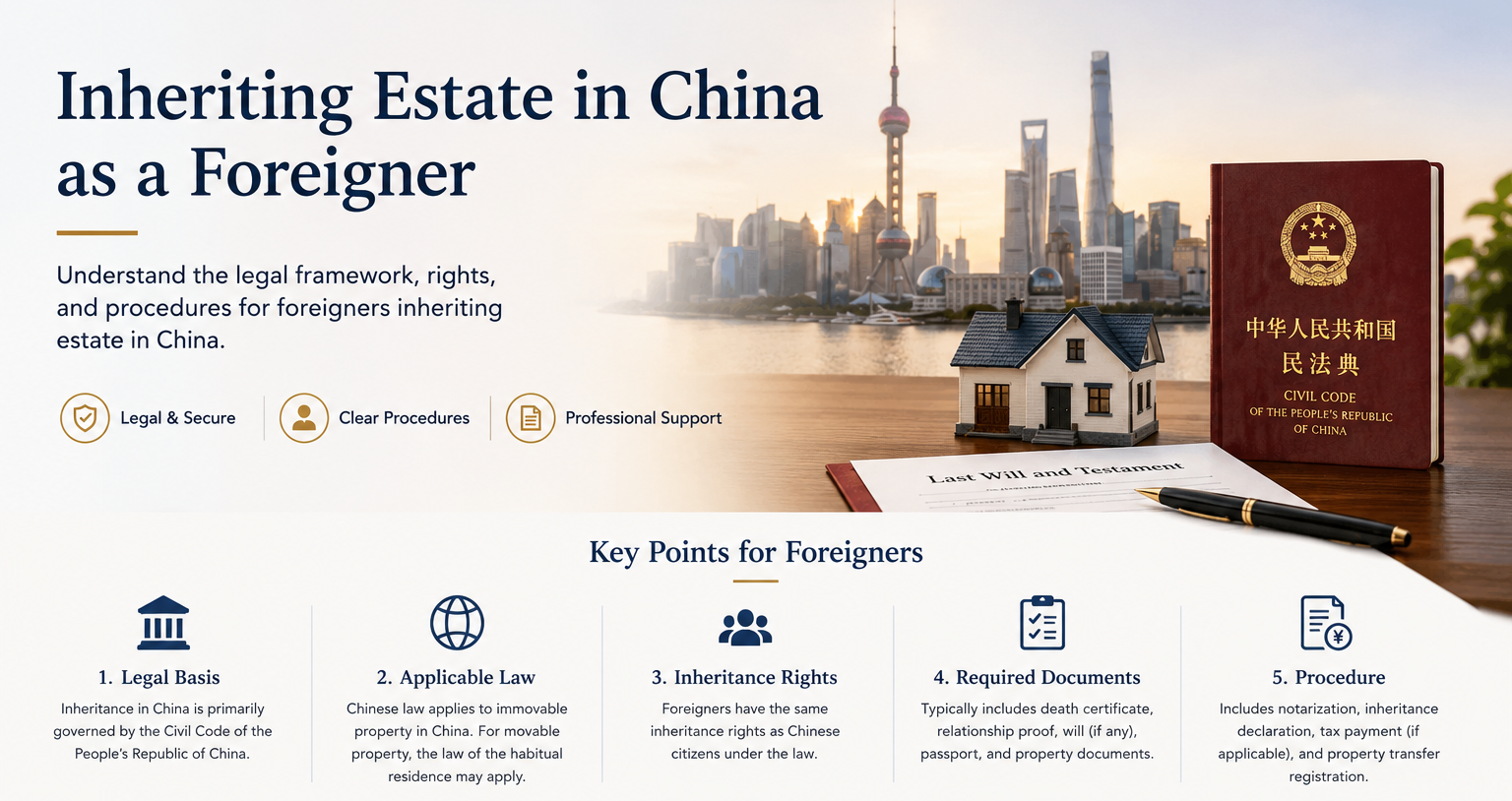
This guide outlines steps for a foreign national to inherit assets in Chuna under a valid will, from confirming the will to transferring assets.
- Confirm Will and Gather Documents
- Legalize & Translate Documents
- Inheritance Notarization in China
- Asset Transfer Registration
- Finalize Transfers and Compliance
Confirm the Will and Prepare Documents
Ensure the Will is valid and accessible. Collect essential documents, including:
- Death Certificate (with Chinese translation if issued outside China)
- The original Will
Identification of the executor and proof of the beneficiary named in the Will
- Proof of relationship with the deceaased.
- Legalise and Translate Foreign Documents
Chinese authorities require any foreign issued documents be authenicated for use in China. This may involve:
- Notarization the documents
- Authentication or Apostille
- Chinese Translation
- Obtain an Inheritance Certificate from a Chinese Notary
In China, notarization is the primary method to formalize inheritance if the will and heirs are uncontested. Application may be made at a Chinese Notary Office locates where the estate is located. Subit the authenticated documents, such as the Will, death certificate, identification documents, relationshp proofs, asset list, etc.
The notary will verify the Will’s validity against Chinese law. China recognizes various will forms (holographic, witnessed, audio, video, notarized). A notarized Will made in China is the most secure form, but any Will that meets legal formalities including a foreign Will that complies with relevant law may be accepted. The notary ensures the will is legally compliant and that the beneficiary are the rightful beneficiary.
Inheritance Notarization Certificate
Inheritance notarization will be issued if all is in order with no disputes, naming the applicant and detailing the entitlement to assets. This certificate formally confirms the legal right to inherit and serves as the basis for transferring each asset.
Register and Transfer the Inherited Assets
With the notarial inheritance certificate, the asset may be transferred to the beneficiary. The process varies by assets type, such as Real Estate, Bank Accounts and Cash Assets, Stocks or Company Shares, and Other Assets.
Finalize Transfers, Tax and Compliance
Notary fees in China are usually charged based on the estate’s value (often a percentage or capped rate). Property and bank transfer fees for inheritance are relatively low or nominal. China does not impose an inheritance tax at present, and inheritance of property is generally exempt from property transaction taxes like Sales and Purchase Deed.
Foreign Exchange & Remittance
If transfer inherited funds or sale proceeds out of China, there are China’s foreign exchange regulations governing the such remittance. If applicable, liquidating assets, for example sales proceed of real property, the bank will require supporting documents to satisfy the State Administration of Foreign Exchange requirements. An annual limit or approval for large sums may be applied.